
What Technicians Find on Calls This Time of Year
Once the afternoon downpours taper off and nights start cooling down, service calls follow a pattern. A homeowner calls because the door suddenly feels heavy, or it squeaks and grinds where it used to run quiet. On the first look, it's almost always the same culprits: rollers and hinges caked with months of humidity-driven grime, springs showing surface rust from sitting through a wet summer, and weatherstripping along the bottom or sides that's gone soft, cracked, or pulled loose. None of this is dramatic damage — it's wear that built up slowly and just now shows up as the temperature swings between warm days and chilly nights.
Why This Season Matters for Your Door
Winter here isn't harsh, but it does bring real temperature swings — warm, sunny afternoons followed by cold snaps overnight. That daily expansion and contraction is hard on metal hardware and on wood or composite panels that absorbed moisture all summer. Doors that swelled slightly during the humid months can bind in their tracks once they dry out and shrink back. Springs and cables that took on rust from salt air or storm moisture are more likely to fail under the stress of daily temperature changes. Getting ahead of it now, before the coldest mornings of the season hit, is cheaper and easier than dealing with a stuck or broken door later.
Inspect the Springs and Cables First
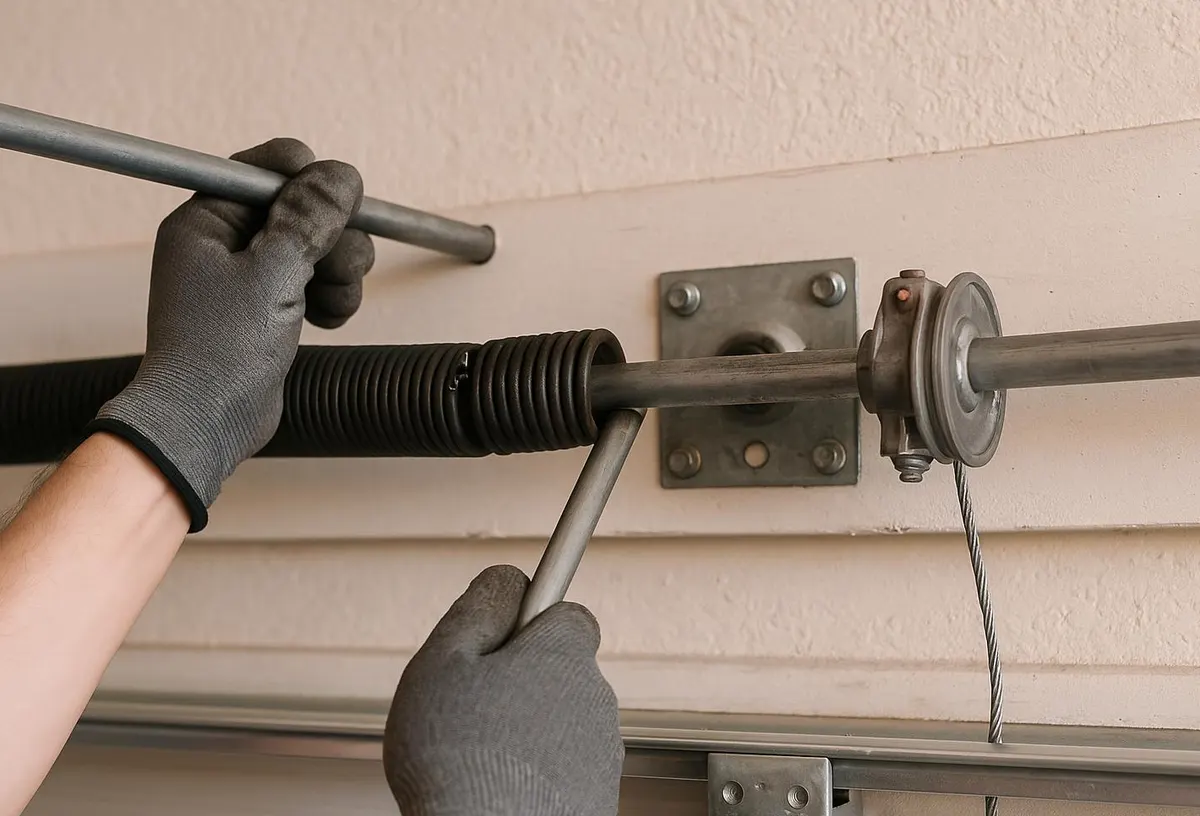
Springs are the most important safety component on the door, and they're also the part most affected by months of humidity and heat. Look for:
- Visible rust or pitting on the coils
- Gaps between coils that look uneven side to side
- Fraying or kinks in the lift cables
- A door that feels noticeably heavier to lift by hand
Springs are under high tension and not something to adjust or replace yourself. If you see rust or wear, that's a sign to get it looked at before the spring fails, which usually happens without warning.
Lubricate Moving Parts
Rollers, hinges, and the track itself collect dust and grit that mixes with humidity into a grinding paste. A simple fix: wipe down the tracks with a dry cloth, then apply a silicone-based garage door lubricant to the rollers, hinges, and the spring coils themselves. Avoid WD-40 or heavy grease, which attract more dirt over time. Do this now and the door will run quieter through the cooler months instead of getting progressively stiffer.
Check Weatherstripping and Seals
The rubber seal along the bottom of the door and the strips along the sides take a beating from sun, rain, and heat all summer. By fall, they're often cracked, flattened, or pulling away from the frame. This matters more in winter than people expect — a gap lets in cold drafts overnight and, more importantly here, lets in moisture and pests during the next round of rain. Replacing worn weatherstripping is inexpensive and takes less than an hour.
Test the Opener and Safety Sensors
Cooler, drier air can actually reveal electrical issues that stayed hidden during humid months, since moisture sometimes causes intermittent sensor faults that disappear once the air dries out. Now's a good time to confirm the auto-reverse safety feature still works (place a block of wood in the door's path and make sure it reverses on contact) and that the photo-eye sensors near the floor are clean and properly aligned. Dust and spiderwebs from summer are common sensor interference you can clear yourself.
Look at Panels for Swelling or Rust Spots
If your door has wood composite panels, check for soft spots, bubbling paint, or swelling along the bottom edge where it's closest to standing water after storms. Metal doors should be checked for small rust spots forming at panel seams or near the bottom corners, especially if your home is closer to the coast where salt air accelerates corrosion. Catching small rust spots now and treating them prevents a much bigger repair down the line.
When to Call Tavares Garage Door
If your inspection turns up rust on the springs, cables that look frayed, or a door that's noticeably harder to lift, don't wait for it to fail completely. Tavares Garage Door handles garage door maintenance and tune-ups that cover lubrication, hardware tightening, and balance checks, plus cable and roller replacement when parts have worn past the point of a simple fix. We work on homes throughout Tavares, Eustis, Mount Dora, Leesburg, Clermont, Lady Lake, Umatilla, and Fruitland Park, and we'll tell you honestly whether a part needs replacing or just some attention.
Ready for a pre-winter check? Call Tavares Garage Door today and get your garage door running smoothly before the cooler nights settle in.